
How Much Does Satellite Stand to Gain in Latest NTIA BEAD True-Up Round?
November 9, 2026

Last week, Vernonburg Group released our analysis on the potential technology shifts that could result from the National Telecommunications and Information Administration’s (NTIA’s) Broadband Equity, Access, and Deployment (BEAD) program true-up round. That analysis shows that the formula employed by NTIA will likely shift funding for the remaining broadband serviceable locations (BSL) away from fiber to satellite connections.
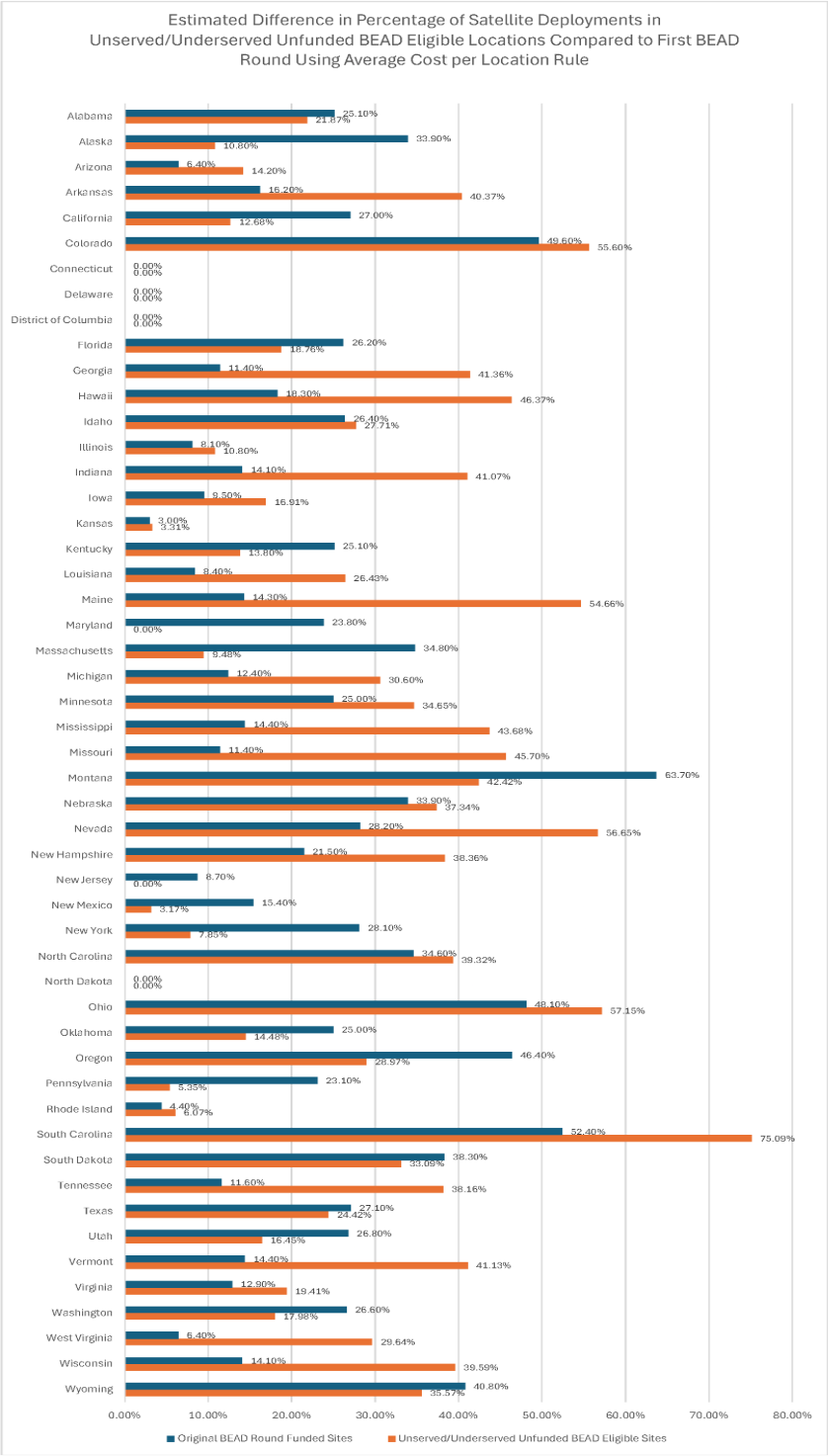
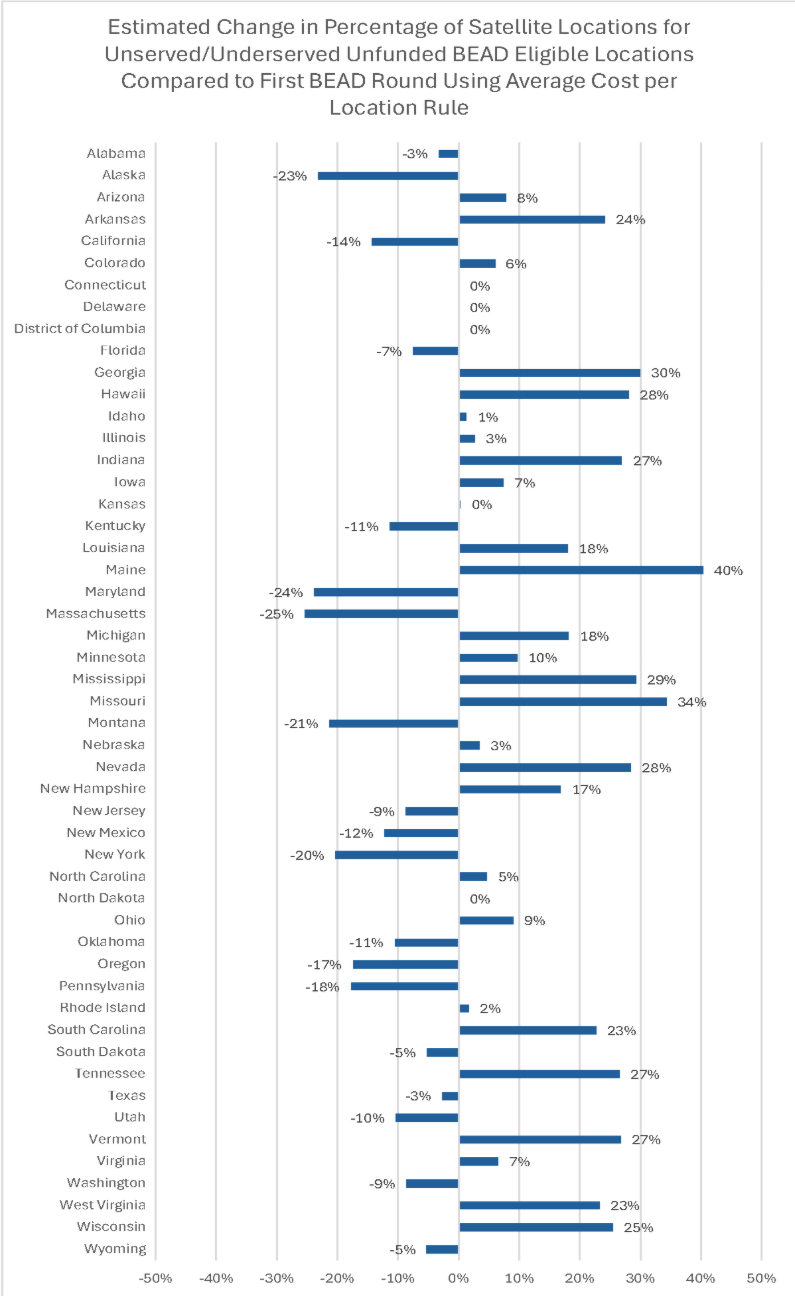
Following publication, a number of people reached out asking for more information on the shift towards satellite. Below is a chart that shows the expected shift towards satellite based on the NTIA formula. While impacts vary by state, we estimate that the percentage of BEAD funding for satellite connections will increase from 5.5% to 7.4%. We estimate that approximately 28 state broadband offices will further increase funding for satellite connectivity, with the top five states – Maine, Missouri, Georgia, Mississippi, and Nevada – experiencing a potential increase of 28–40 percent.
If you are a state broadband office and would like to better understand our analysis for your state, please feel free to reach out to us at greg@vernonburggroup.com or paul@vernonburggroup.com.